If there's one thing Chinese medicine has always understood, it's that life moves in cycles.
The seasons change.
Day becomes night.
The stars slowly shift across the sky.
The tides rise and fall.
Trees burst into leaf, flower, bear fruit and eventually become dormant before beginning again.
Nothing in nature remains exactly the same.
Neither do we.
Perimenopause is one of those natural transitions.
Today it's often described through changing hormones or a list of unwanted symptoms. While those changes are very real, Chinese medicine invites us to see something more.
Rather than asking, "What's going wrong?", it asks a different question:
"What is changing, and how can we support that change?"
It's a subtle shift in perspective, but one that can completely transform how we experience this stage of life.
Everything Exists in Relationship
Chinese medicine developed through careful observation of the natural world.
Its physicians noticed that nothing exists in isolation. Every season prepares the next. Growth cannot continue forever. Periods of activity are naturally followed by periods of consolidation and rest. Even the brightest summer eventually gives way to autumn.
These changes weren't viewed as losses.
They were simply part of life.
Over centuries, this understanding became known as the Five Phases. Despite the name, they are not simply five separate categories. They describe the relationships and movements that shape life itself. Each phase supports the next, while also preventing another from becoming excessive. Health is not about remaining permanently in one state, but about moving through these cycles with as much harmony as possible.
Human life follows the same pattern.
There are seasons for learning.
Seasons for building careers.
Seasons for raising families.
Seasons for caring for ageing parents.
And seasons that invite us to slow down, reflect and discover a different kind of strength.
Perhaps one of the greatest challenges of modern life is that we're encouraged to remain in a season of constant growth. Productivity, achievement and busyness are celebrated, while rest, reflection and restoration are often postponed.
Eventually, however, life asks something different of us.
Perimenopause: A Season of Transition
One of the oldest texts in Chinese medicine, the Huang Di Nei Jing, describes a woman's life unfolding in seven-year stages. Childhood gives way to adolescence, adolescence matures into adulthood, and the reproductive years eventually transition into another season.
None of these stages is described as disease.
Each has its own purpose.
Chinese medicine doesn't see menopause as the body failing.
It sees it as life changing direction.
That doesn't mean the transition is always easy.
Far from it.
But understanding it as a natural process rather than a malfunction changes the conversation.
Instead of asking how we can return the body to how it was, we begin asking how we can support the body as it adapts to where it's going.
The Opportunity Within Change
One of the ideas I find most hopeful in Chinese medicine is that periods of transition can also become periods of renewal.
Traditional physicians regarded menstruation, childbirth and menopause as three significant opportunities to influence a woman's long-term health. These weren't simply events to endure. They were times when careful support could strengthen vitality for many years to come.
This offers a very different way of thinking about perimenopause.
Sometimes the transition doesn't create the imbalance.
Sometimes it reveals it.
Perhaps sleep has never truly been restorative. Stress has quietly accumulated over many years. Digestion has gradually become less resilient, and energy has been spent caring for children, supporting parents, building careers or simply keeping life moving. The body has often adapted remarkably well.
Perimenopause may simply reduce some of that reserve, allowing patterns that have been quietly present for years to finally ask for our attention.
As Lia Andrews beautifully describes, these imbalances may first appear as "a whisper", become "a stern voice" after childbirth, and eventually "a howling scream" during menopause.
Seen this way, symptoms aren't simply problems to silence.
They're information.
An invitation to understand what your body needs next.
More Than Symptom Relief
Modern medicine has transformed the care available during perimenopause.
Hormone replacement therapy has improved the lives of many women.
Strength training preserves muscle and bone.
Adequate protein becomes increasingly important.
Good sleep, regular movement and thoughtful nutrition all deserve the attention they're receiving.
Supplements can also play an important role when they're the right supplements for the right person. But they're only valuable if they lead to better function: better sleep, more energy, greater strength, a calmer mind, or simply feeling more like yourself again. Without those changes, it's worth asking whether you're simply making very expensive, nutrient-rich urine.
Chinese medicine isn't opposed to any of these approaches.
Quite the opposite.
They can all contribute to better health.
It simply asks another question.
What kind of health are you building for the next thirty years?
Health isn't simply the absence of symptoms.
It's the capacity to adapt.
To recover.
To remain curious.
To enjoy relationships.
To keep doing the things that matter most.
In Chinese medicine, the aim has always been to cultivate vitality rather than merely treat illness.
Acupuncture Is Often a Progression
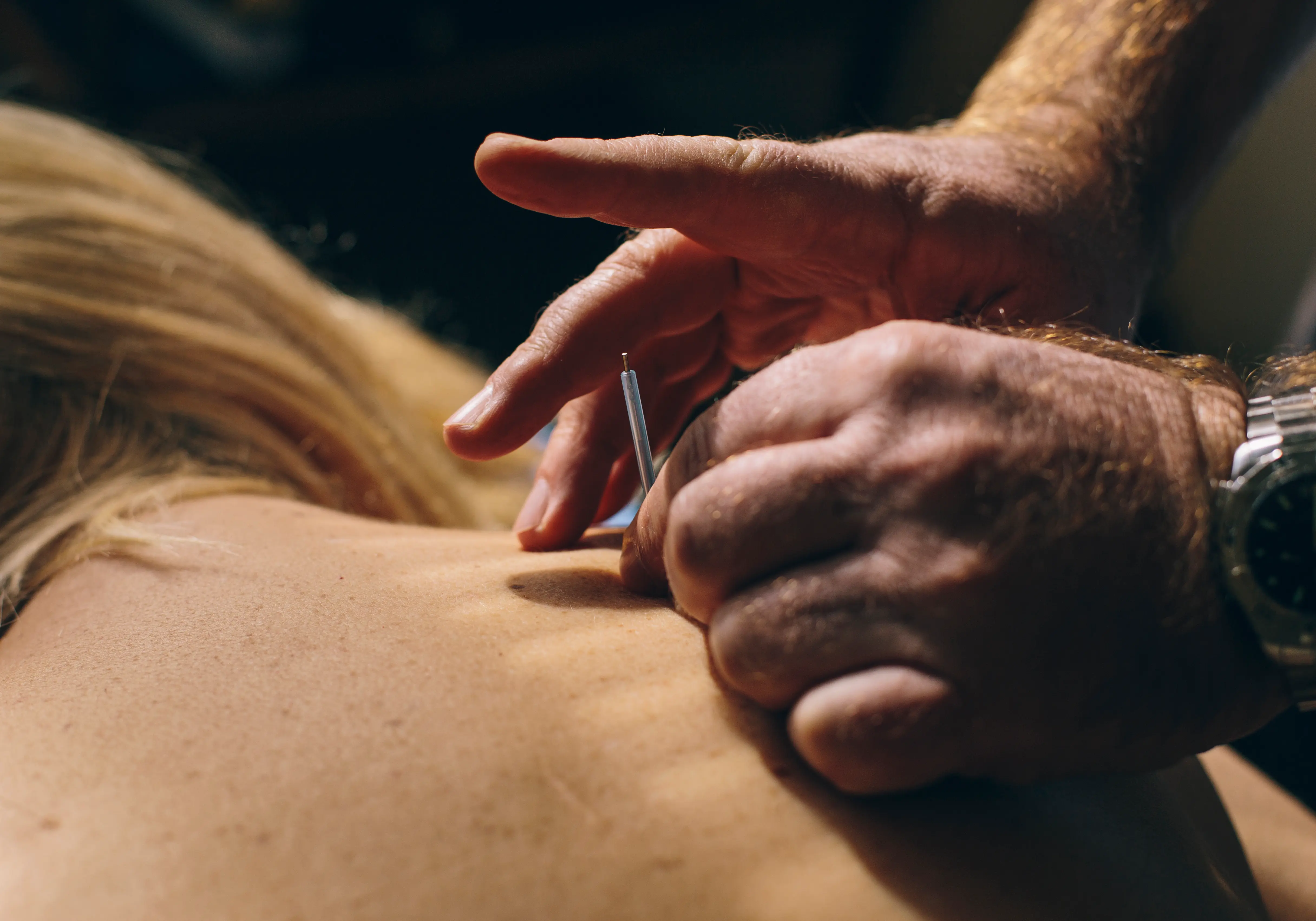
One of the reasons I value acupuncture so highly is that it often begins with symptom relief but doesn't end there. Sometimes symptoms settle quickly. At other times, improvement happens more gradually. Either way, each positive change creates the conditions for the next.
As people begin sleeping better, moving more comfortably or feeling calmer, those early improvements often make other changes possible. Better sleep creates more energy. More energy makes movement easier. Movement builds strength and confidence. A calmer nervous system improves resilience. Gradually, health begins to build upon itself.
Treatment isn't about forcing the body back to an earlier stage of life. It's about helping you move well into the next one. Over time, the body often becomes more adaptable—not simply because symptoms have been suppressed, but because health itself has been strengthened.
The Family Acupuncture Approach
Many of the women I meet aren't only experiencing hormonal changes.
They're balancing work, family, ageing parents, relationships and countless responsibilities that have accumulated over decades.
Perimenopause rarely arrives on its own.
It's woven into everything else that's happening in life.
That's why treatment always begins with listening.
Not just to symptoms.
But to the whole person.
Together we work to understand where your body has adapted well, where it's asking for more support, and how we can help you move through this transition with greater ease.
One of the reasons I enjoy caring for women during this stage of life is that the changes often reach well beyond the symptoms that brought them to the clinic. As treatment progresses, many begin to describe a growing sense of ease. They sleep better, worry less, laugh more, and gradually feel more at home in themselves. It's difficult to quantify, but unmistakable when it happens.
To me, that's what cultivating health looks like.
Looking Ahead
One of the things I admire most about Chinese medicine is that it doesn't ask us to fight change.
It asks us to understand it.
To move with it.
To find health within it.
Autumn isn't spring failing.
It's simply the next season.
Perimenopause isn't something to "get through."
It can become an opportunity to pause, to listen, and to invest in the health you'll carry into the decades ahead.
Sometimes life's greatest transitions become its greatest opportunities—not because they're easy, but because they invite us to live with greater wisdom, greater resilience, and perhaps a little more joy than before.



.svg)